



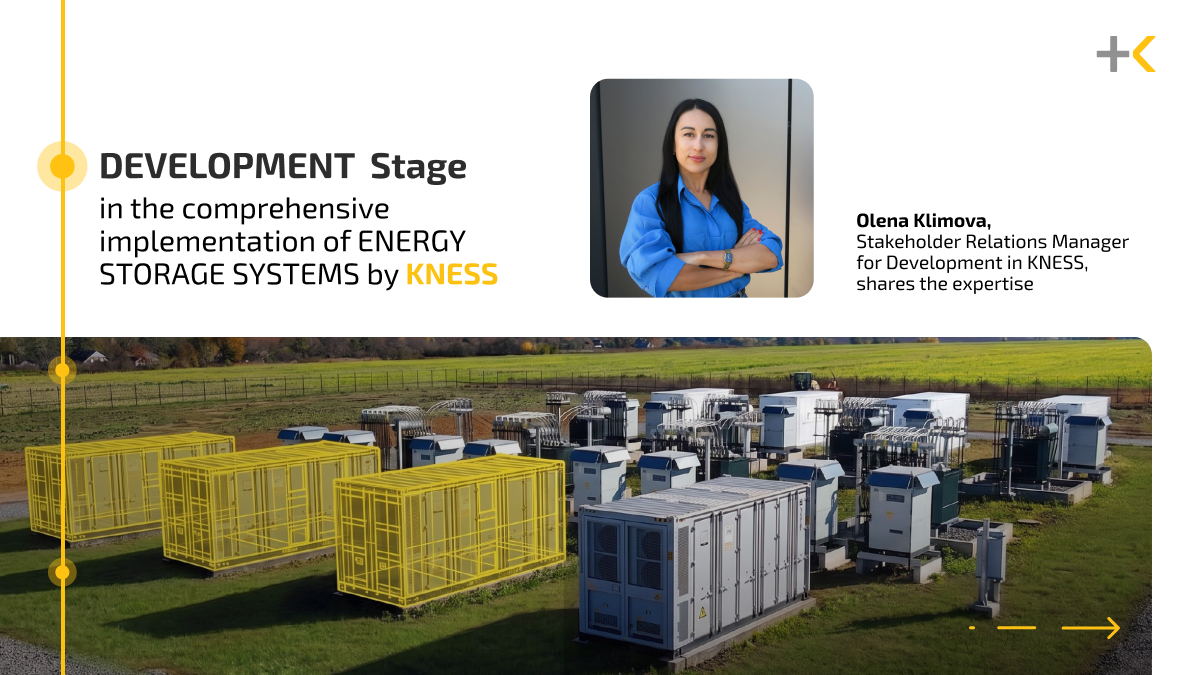
How can an energy storage system (ESS) project be effectively implemented for successful operation in the market? KNESS takes a comprehensive approach: from development and turnkey construction to technical maintenance and ongoing commercial management.
Development is the starting point in the timeline for implementing ESS projects. With over 15 years of experience working on energy projects, including ESS, with a total capacity of over 1 GWh, the effectiveness of the project’s implementation and subsequent operation depends on the quality of work during the development phase.
So let’s take a closer look at the specifics of this stage together with Olena Klimova, Stakeholder Relations Manager for Development in KNESS.
Launch of the ESS project
The development process begins with the search for and comparative analysis of potential sites for ESS deployment. After analyzing all information regarding the feasibility of installing ESS at the selected site, we assess the available capacity of the adjacent power grid.
“At this stage, it is important to accurately assess the transmission capacity of the surrounding grids. This allows us to determine the project’s viability early on and avoid spending money on ‘unfeasible’ locations. This requires experience, technical expertise, and specialized software. At KNESS, we use Power Factory. Our team of engineers has already assessed the potential for connecting thousands of megawatts of capacity, including solar, wind, and ESS”, explains Olena Klimova.
About the equipment and site plan for ESS
ESS configuration is selected based on the customer’s needs, budget, and the technical capabilities of the site. When selecting the type of equipment for a project, we recommend focusing on the business model and the technical capabilities of the site. After all, the market value and financial viability of the ESS project are determined as early as the development stage. Therefore, our team’s goal is to create the most efficient asset possible – one that is technically advanced and economically viable even before construction begins.
Next, we determine the configuration and size of the land plot required for construction, develop a detailed site plan for the ESS, process the land allocation, and obtain the necessary permits.
When calculating the area required for ESS, it is important to take every detail into account: zones for convenient installation and maintenance, fire safety requirements, and so on. This makes it possible to optimize costs. That is why a team of experienced design engineers at KNESS works on the preliminary layout of the site”, says Olena.
Construction preparation
After planning the site, we prepare the necessary documents to obtain the Urban Planning Calculation and the Urban Planning Conditions and Restrictions in accordance with all requirements, in order to speed up the process as much as possible and avoid legal risks before construction begins. We enter into a connection agreement (i.e., obtain the technical specifications) and assist in obtaining the permit to begin construction.
Once development is complete, ESS projects move to the RTB stage – ready for construction. From there, KNESS’s EPC team implements the project while adhering to the established budget and schedule.
We will provide details on all subsequent stages of the ESS implementation – design, construction, and operational, technical, and commercial management by KNESS in our upcoming articles.


