



KNESS at the conference “Polish-Ukrainian Cooperation for Reconstruction and Strategic Partnership”
22/11/2023
Certification of internal auditors
01/12/2023Press center
Galvanizing of metal structures for solar power plants
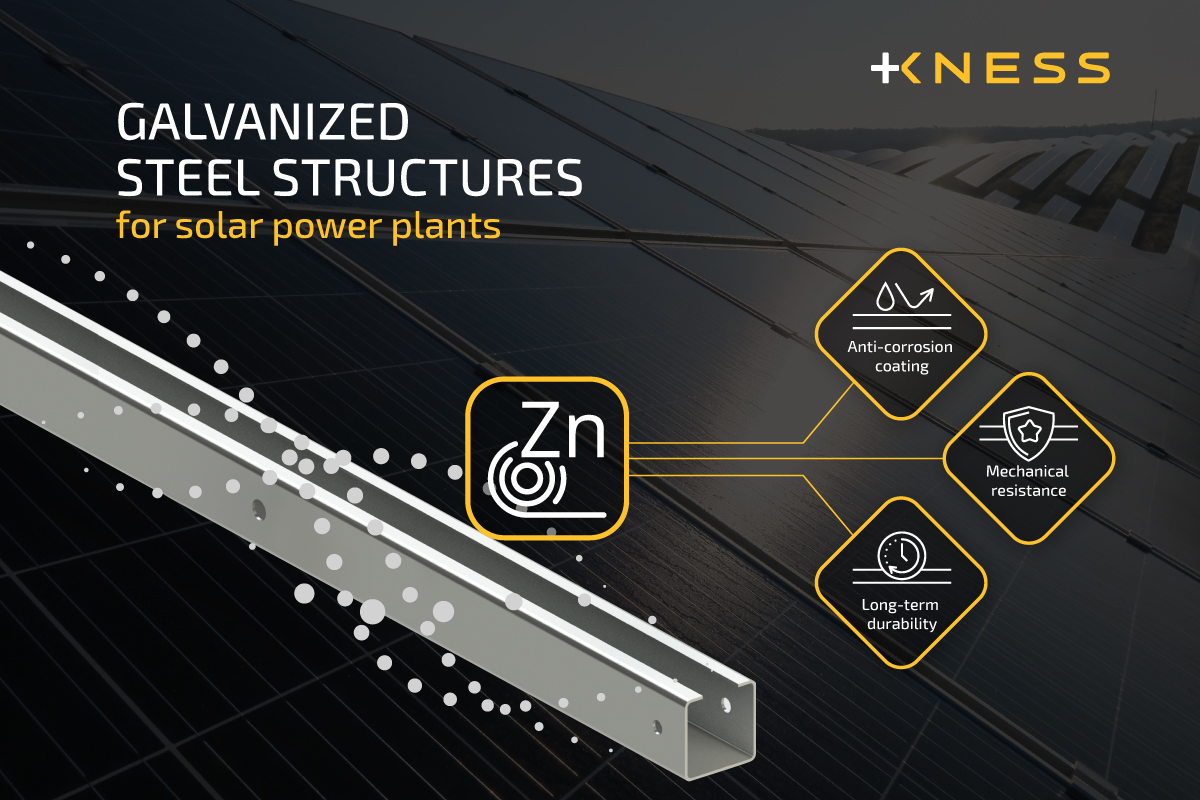
High-quality metal structures for mounting photovoltaic modules are an important component of a power generation facility. Supporting metal structures are, in a way, the skeleton of a solar power plant. The durability of the entire facility depends on their strength and reliability.
What is the most important thing to consider when choosing metal structures? The key to a long service life of any metal structure is reliable anti-corrosion coating. Atmospheric conditions, moisture, and acidity affect the stability and mechanical integrity of the metal. This process is called corrosion — the chemical or physical interaction of the metal with the environment that affects its structural and physical properties. It is a natural process that converts a refined metal into a more chemically stable form, such as its oxide, hydroxide, carbonate, or sulfide. In addition to becoming visually unattractive, the metal loses its mechanical stability, becomes fragile and vulnerable to external damage. Metal corrosion is a global problem today, as it causes large-scale economic losses.
How to protect metal?
Corrosion protection of metal is divided into two types: active and passive.
Active corrosion protection involves coating the metal with a layer of a certain protective alloy that reacts with the environment before the main metal layer and thus prevents corrosion. Zinc, aluminum, magnesium, and their alloys are commonly used for this type of protection in various proportions.
Passive corrosion protection consists of applying a layer of barrier coating to the metal, which isolates the metal from the external environment and prevents moisture and other corrosion factors from entering it. For this purpose, special primers and enamels for metal are used, special corrosion inhibitors are added to the surface, or layers of metals that do not interact with air and practically do not corrode (chrome, nickel, tin) are applied.
In the manufacturing of supporting metal structures for solar power plants, metal that has been exposed to active protection is most often used. Why? Compared to other types of protection, it provides long-term corrosion protection and is also the most cost-effective, environmentally friendly, and less resource- and time-consuming.
Which metal protection is better?
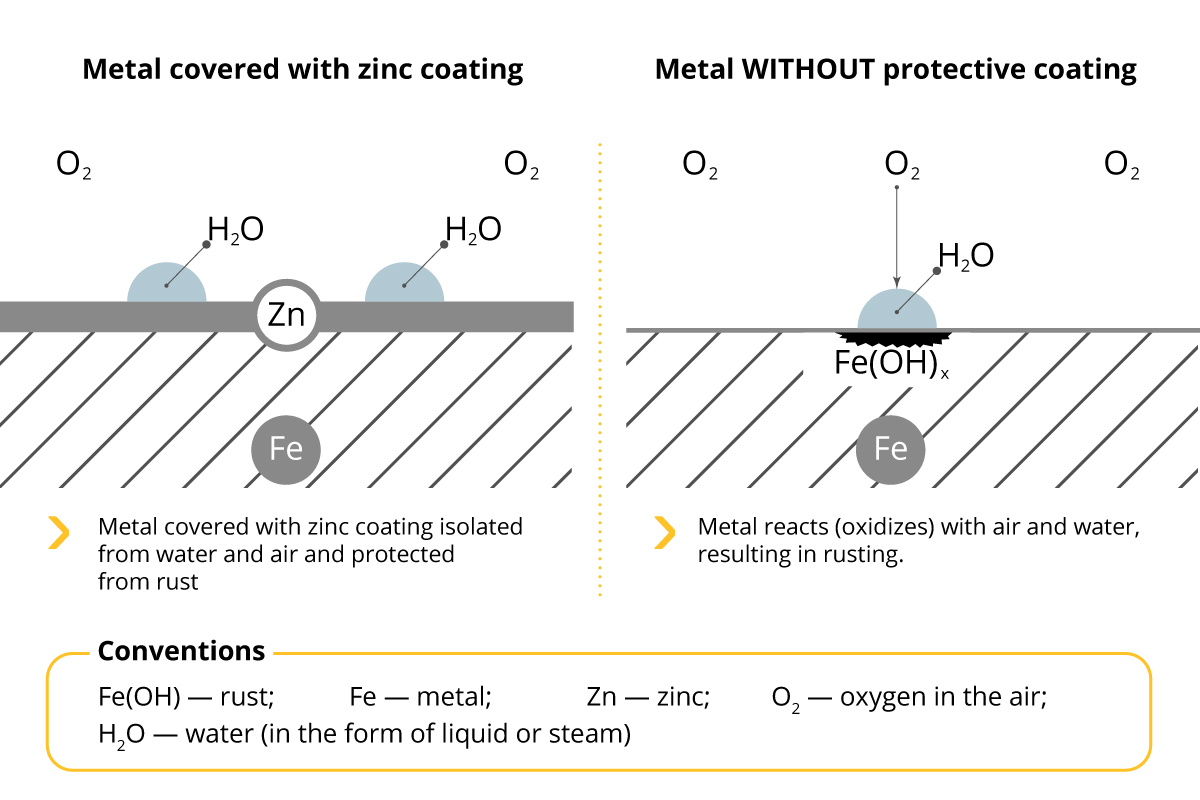
The most common type of active anti-corrosion coating is galvanizing, in particular:
- Hot-dip galvanizing is the immersion of metal in a bath of hot zinc or its alloy with other metals, which is carried out directly at the production site. This is one of the most common technologies — the Cook-Northman method.
- Cold galvanizing is the application of a special spray containing zinc salts, which can be carried out locally at the facility.
Hot-dip galvanized steel absolutely predominates in the production of metal structures in photovoltaics. The lifetime of such a protective layer can reach 10 years or more (manufacturers of metal structures also declare this as a warranty period). Numerous tests confirm that the hot-dip coating is self-regenerating, highly effective, and resistant to external conditions. It is the most reliable, simple, and cost-effective technology for corrosion protection of metal structures.
Cold galvanizing is mostly used locally and in certain cases (to hide small defects).
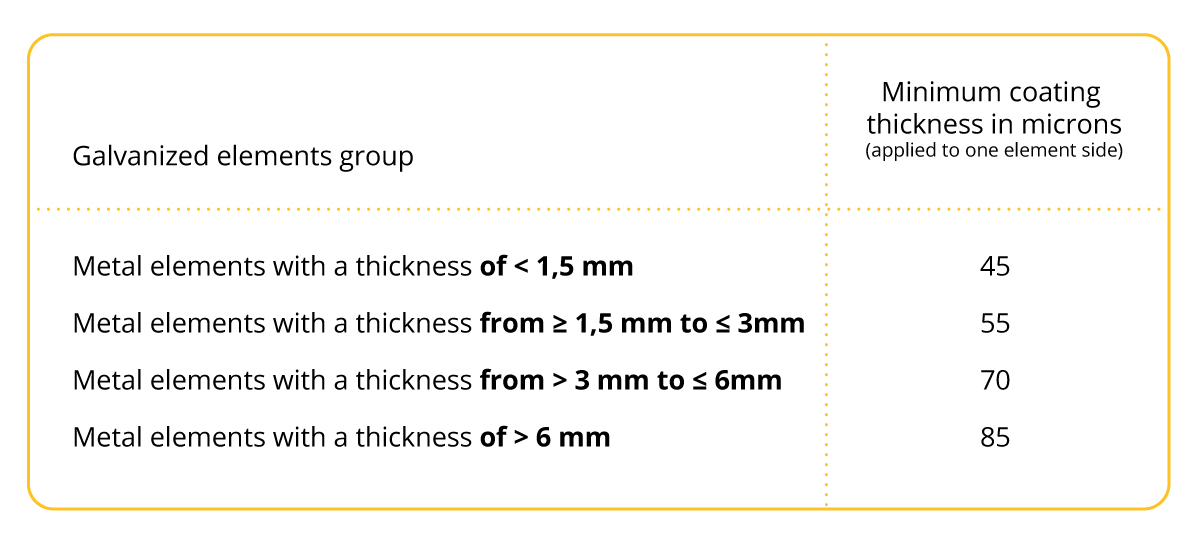
The use of steel structures with an anti-corrosion coating of 250 g/m2 to 350 g/m2 using the hot-dip galvanizing method in accordance with ISO 1461:2009 guarantees long-term rust protection and structural reliability of steel structures. According to the standard, different thicknesses of the zinc-containing protective layer are required for metal structures of different thicknesses:
“This is exactly the type of anti-corrosion coating that protects metal structures for solar power plants manufactured by KNESS. We have been working in the energy market since 2009. In 2015, we launched our own production of supporting metal structures for ground and rooftop solar power plants. The quality of galvanized steel structures by KNESS meets European requirements and is confirmed by a TÜV certificate. Since 2023, KNESS steel structures have been exported to the European market. More than 110 solar power plants with a total capacity of 1.15 GW have been constructed in Ukraine, Poland, and the Baltic countries using the structures of our in-house production.
Our considerable experience in the implementation of turnkey solar power plants allows us to offer our customers reliable, versatile, and cost-effective solutions. It is important for us that each project implemented using the metal structures of our production generates terawatts of clean electricity for decades,” said Kyrylo Dobrokhlop, product manager at KNESS.
Learn about KNESS solutions for ground-based and rooftop solar power plants here.


