



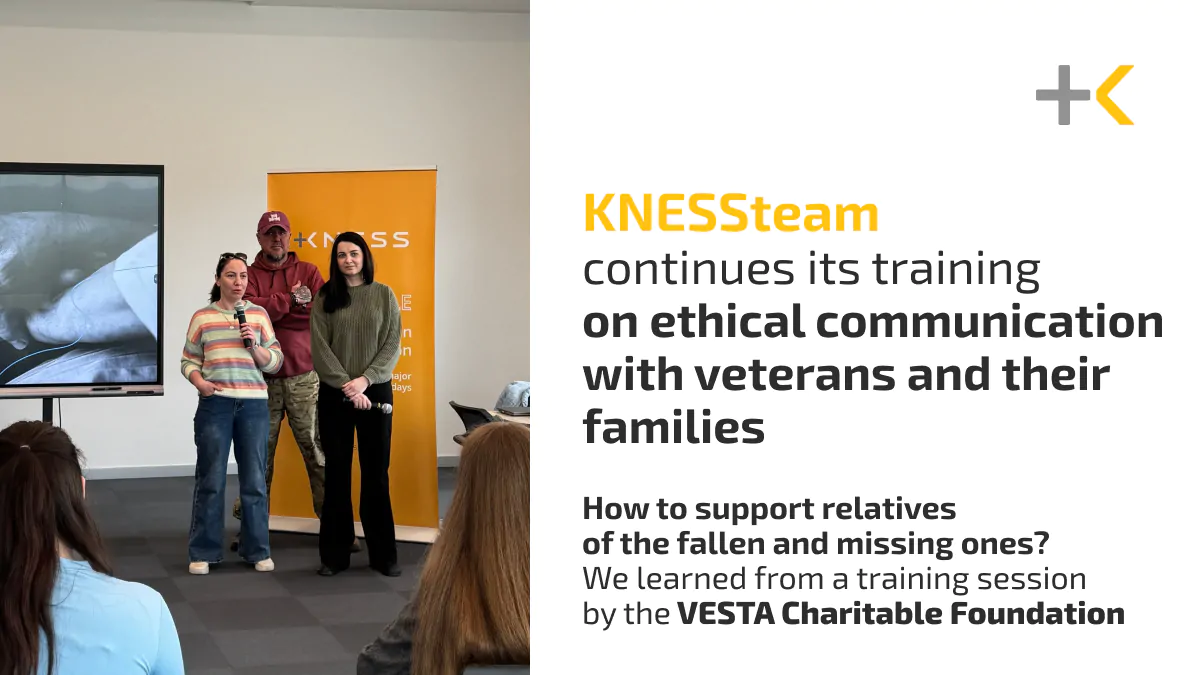
KNESS team continues to learn about ethical communication with veterans and their families. As part of KNESS’s corporate veteran program, another training session was held by our partners – CF “Vesta.” This time, the focus was on supporting those who are coping with loss. Olha Pronina, a psychologist of CF “Vesta” mobile support service, helped us navigate this emotionally complex topic. We’ve noted down the key takeaways from the lecture.
How to support relatives of the fallen and missing ones?
Every loss is personal. The way a person experiences and processes loss is entirely their own choice. Any comparisons of experiences, projection of one’s own views about loss, or invalidation of someone’s feelings are inappropriate.
What actions and words can be harmful?
- “Cry — it will make you feel better.”
- “Calm down! Stop crying already…”
- “Be strong.”
- “You still have someone to live for.”
- “Time heals.”
These phrases invalidate a person’s feelings and distance them from their genuine emotions.
- “Don’t go to the cemetery so often.”
- “Go to church.”
- “You should do this instead…”
These are unsolicited pieces of advice and the imposition of personal philosophical or religious beliefs, which may not align with the person’s worldview and can therefore be inappropriate.
- Ignoring or avoiding the topic of grief
- Forcing someone to talk about their grief
- Judging or invalidating any expression of grief
How can you support a person whose close ones have fallen or gone missing?
Help them calm down: offer water, hugs, hold their hand, or “breathe together” to help stabilize their emotional state.
Be present and actively listen: ask how the person is feeling, respond to their words, nod, paraphrase, and repeat what they are saying.
Offer support: clearly explain what kind of help you are ready to provide and to what extent.
Help with everyday tasks: either yourself or by organizing support from friends, relatives, or services if the person is losing functionality. It is important to avoid prolonged overprotection so the person can gradually regain independence and functionality.
Regularly check in on the person’s condition and needs over a long period of time: even if they are not ready to share or respond with anger, do not take it personally. Remember that a person’s emotional state and needs may change over time.
Shared activities and rituals help people feel connected and gradually return to life
What can you do together?
For those whose close ones have gone missing:
- participate in support groups
- join awareness events and campaigns dedicated to missing persons and prisoners of war
- take part in meetings with people released from captivity, create photo albums, or help develop concepts for events that remind others about missing persons
For those whose close ones have fallen:
- observe the daily minute of silence
- honor their memory on nationally recognized remembrance days (Defenders Day, the Day of Remembrance for those fallen in the war and missing persons, etc.)
- be present during important dates (birthdays, the day of death, holidays that will now take place without the deceased person) and show understanding toward the person’s emotional state during these periods.
Important! If you notice that a person has been isolating themselves for a long time, remains unable to function, is in a depressive state, or does not respond to offers of support, encourage them to seek professional help (support groups, doctors, psychotherapists, or grief counselors who help people cope with loss).
How does KNESS support the families of fallen and missing persons within its corporate veterans program?
“In KNESS, we regularly reach out to families who have lost relatives in the war: we communicate with them, check on families’ needs, provide financial assistance from the company, offer consultations regarding benefits, support families throughout the process of collecting and preparing the necessary documents, share roadmaps, informational resources, and contacts of NGOs that provide specialized social, legal, and psychological support. For children of fallen and missing persons, all benefits, compensations, and payments provided for by KNESS policies and regulations are fully preserved” — says Mariana Hulchak, Veteran and Their Families Support Specialist in KNESS.
We thank CF VESTA for the meaningful tips and the team training!


