



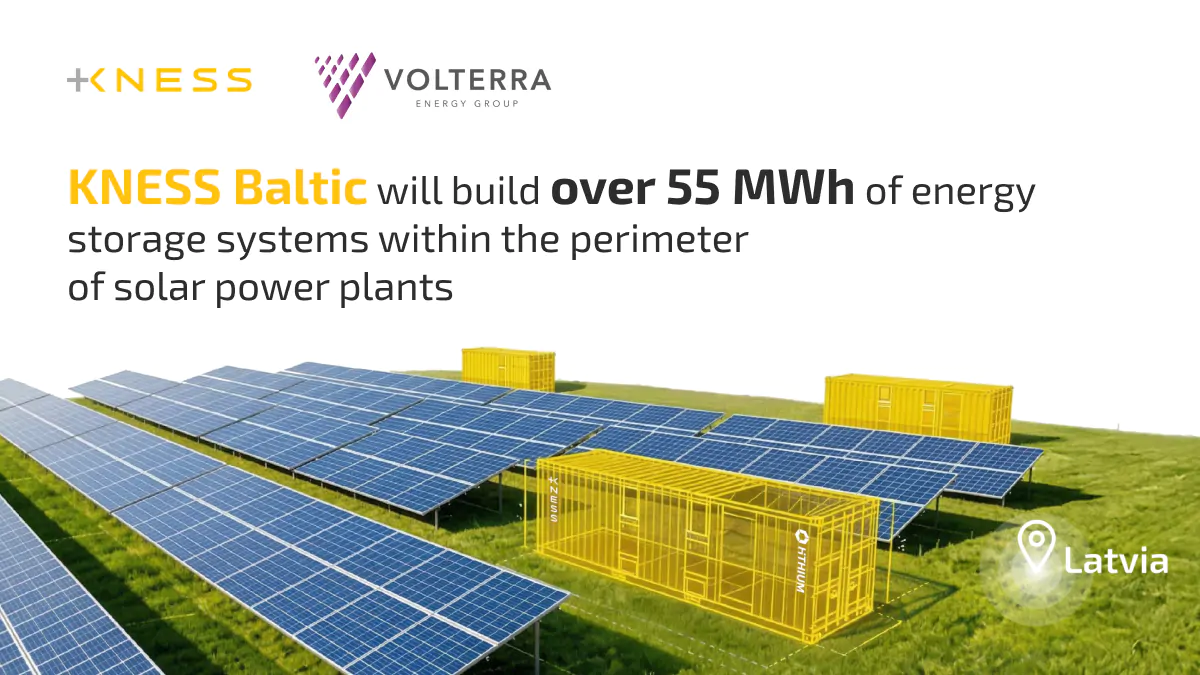
KNESS Baltic will implement a large-scale project in Latvia to build over 55 MWh of new energy storage capacity within the perimeter of solar power plants (co-location). The storage systems will be integrated into six existing solar power plants (SPPs) with a total capacity of 55 MW, which were built by the KNESS Baltic team in various regions of the country. The investor behind these energy projects is Volterra Energy Group – a producer of electricity from renewable sources and our strategic partner for many years.
“The development of modern energy storage solutions is one of the key directions of KNESS’s strategy. ESS is a versatile tool that ensures grid balancing and stability, enables the seamless integration of renewable energy sources, and enhances the economic efficiency of projects. With practical expertise and engineering experience in implementing ESS for various application scenarios in Ukraine, we are now launching such projects for the Latvian market as well. After all, scaling up these projects is about modernizing the power system and the industry as a whole” – mentions Sergii Shakalov, СЕО of KNESS Group.
KNESS Baltic team is implementing these energy projects under an EPC contract (Engineering, Procurement, and Construction) which entails responsibility for the entire project lifecycle: from engineering, design, and equipment procurement to construction and grid connection. The company’s specialists are currently in the design phase. At the same time, production is already underway and the delivery of energy storage systems and other necessary equipment is being coordinated. The facilities will be built using technological solutions from our partner HiTHIUM, one of the world leaders in ESS manufacturing. KNESS is the official distributor of HiTHIUM ESS in Ukraine and the Baltic countries, which allows for maximum optimization of engineering and logistics processes.
The future hybrid facilities will provide ancillary services for frequency regulation in the grid, supporting Latvia’s power system. They will operate under an arbitrage model, which involves storing electricity from the SPP during periods of low demand (or peak solar generation) and selling it during periods of shortage (peak demand hours). The integration of ESS significantly increases the economic efficiency of solar power plants by mitigating their stochastic nature, and also strengthens the power system as a whole by adding new balancing capacity.
We would like to thank our partner for their long-standing trust and our win-win cooperation in developing modern energy infrastructure in the region.


